
The guide
The three formulas#
That’s all the maths you need.
| What | Formula |
|---|---|
| Plate cost | Add up (quantity × cost per unit) for every ingredient in the recipe. |
| Food cost % | Plate cost ÷ selling price × 100 |
| Price for a target % | Plate cost ÷ target % × 100 |
| Cost of food sold (a month) | Opening stock + purchases − closing stock |
| Monthly food cost % | Cost of food sold ÷ food sales × 100 |
A worked example#
One full chicken karahi. The prices below are examples only: use your own supplier’s rates.
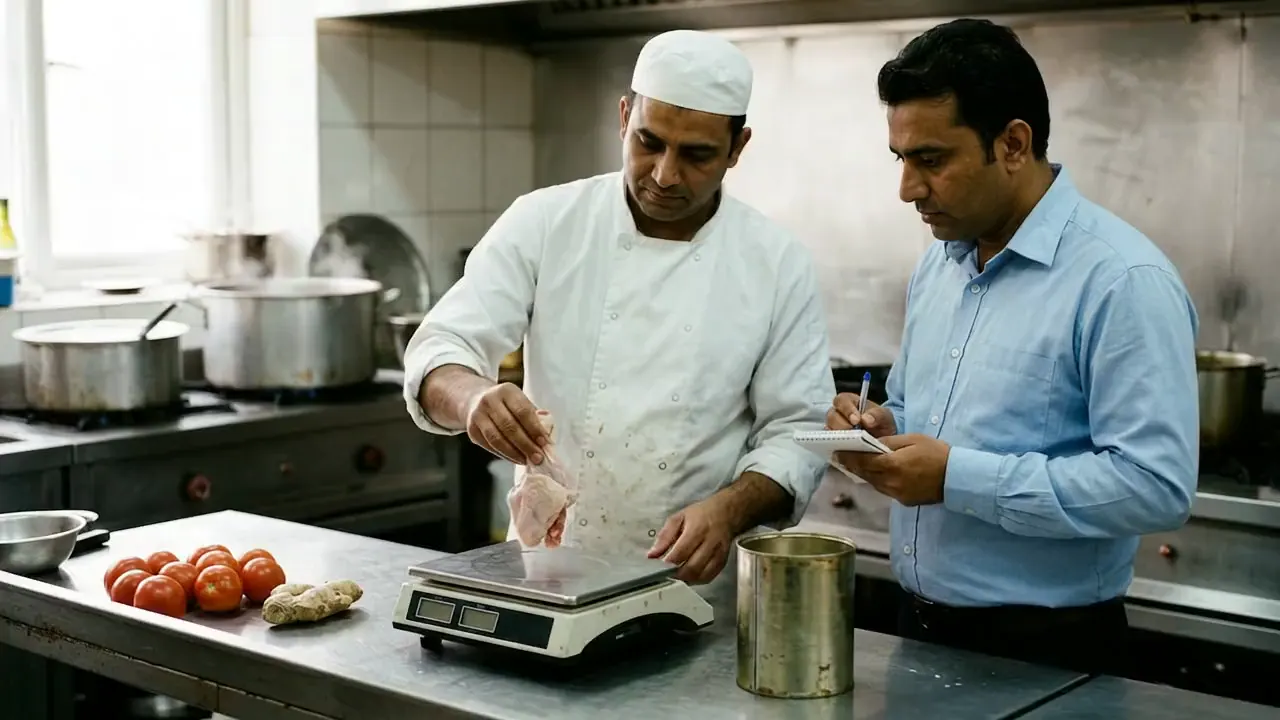
Ingredients: 1 kg chicken at Rs. 700, 0.25 kg tomatoes at Rs. 200 a kg (Rs. 50), 0.15 kg ghee at Rs. 600 a kg (Rs. 90), and Rs. 60 of ginger, chillies and spices. Plate cost: Rs. 900.
Sold at Rs. 2,800, food cost is 900 ÷ 2,800 = 32%. To hit 30%, the price would be 900 ÷ 0.30 = Rs. 3,000.
Check it with a stock count#
Recipes tell you what a plate should cost. A stock count tells you what you really used, including waste, staff meals and mistakes.
Count the store room on the 1st, add every purchase in the month, and count again at month end. Opening + purchases − closing is what the kitchen used. Divide by food sales.
If the monthly % is well above your plate %, look for waste or portions that are too big.
What is a “good” food cost?#
Figures like 28–35% are commonly quoted by foreign restaurant software companies. We have not found a Pakistan source, so treat them as a rough guide only.
A karahi house, a café and a fast-food counter will all land in different places. Track your own number month by month.
When ingredient prices change#
Chicken, ghee and flour prices move every month.
- Update cost per unit when a new supplier bill comes in.
- Re-cost your top 10 dishes every month.
- Change menu prices for dishes that have drifted past your target %.