
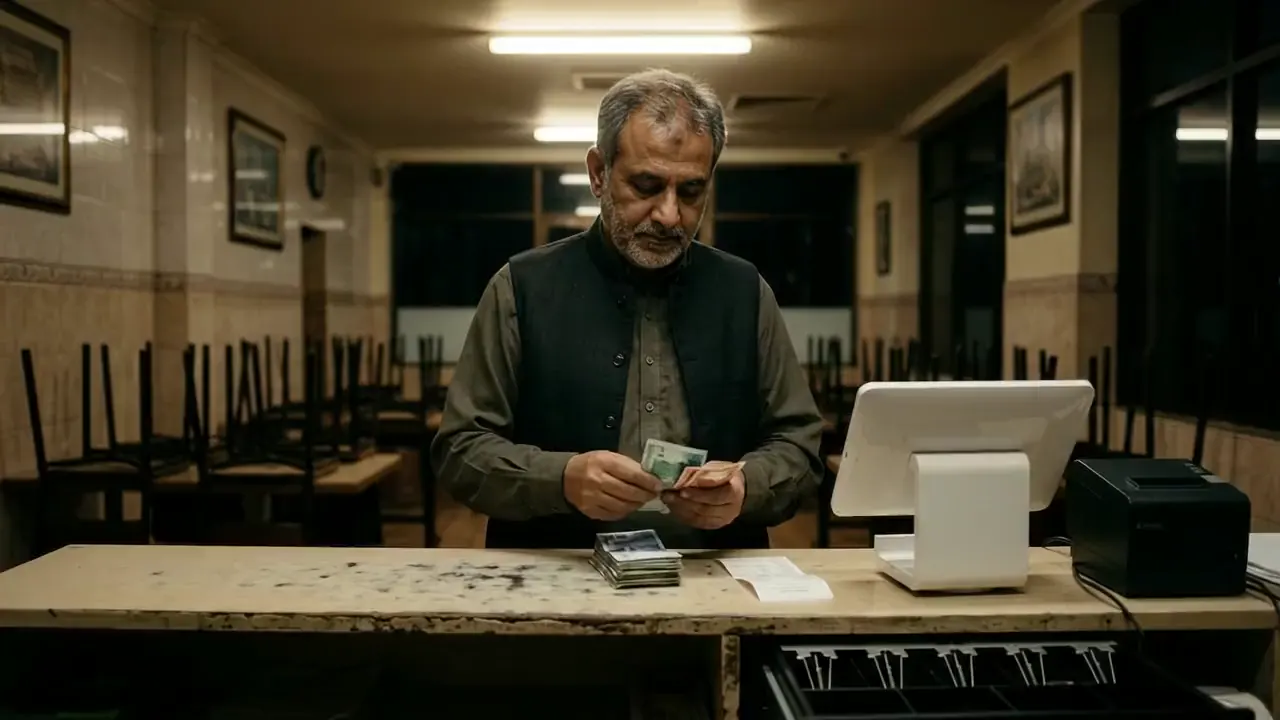
The guide
What goes in the report#
Keep it to one page. These are the lines, and how each is worked out.
| Line | What it means |
|---|---|
| Gross sales | Every paid bill that day, tax included. |
| Discounts | Total taken off bills. Shown on its own so you see how much you gave away. |
| Refunds | Money handed back today, with how many bills. |
| Tax | Tax collected, minus tax on refunded bills. |
| Net sales | Gross − refunds − tax. What the restaurant really earned. |
| Orders and average bill | Number of paid bills, and gross ÷ orders. |
| By order type | Dine-in, takeaway and delivery. |
| By payment method | Cash, card, wallet (JazzCash / Easypaisa) and bank transfer. |
| Top dishes | What sold most, by units. |
Why cash and card must be split#
Your drawer only holds the cash. If the report mixes cash and card, you can’t tell whether the drawer is short.
Tax can differ too. PRA charges 16% on cash bills in Punjab, and a lower rate on card and digital payments. We have seen different figures for the lower rate, so check it with PRA before you use it.
Source: PRA: Punjab Sales Tax on Services Act 2012 (2026-27 edition)
Refunds belong to the day you give them#
If a customer comes back tomorrow for a refund, count it tomorrow. Don’t go back and change yesterday.
That way a day you have closed and counted never changes, and the cash in the drawer always matches the report.
The closing routine#
Five minutes at the end of the night.
- Print or open the day’s report.
- Count the drawer and take out the morning float.
- Compare the count with cash sales. Write down any difference and why.
- Check card and wallet totals against the machine or app.
- Sign it, and keep it. FBR’s POS rules also ask for day-end closing.